One day we had to get to the muscles that most musicians know about that most other people do not. That is the muscles of the face in particular. This week will be more occupational therapy focused to balance the larger muscle groups and help those who don’t have easy therpuetic access and don’t know what to do.
This week goes out to my friend from church John who thought of the masks during Covid as a reprieve that he didn’t have to show his face as he lost muscular control. According to the doctors he can return to using all of the muscles in his face, but he doesn’t know how or where to start. Apparently the physical therapist he saw didn’t know how to help.
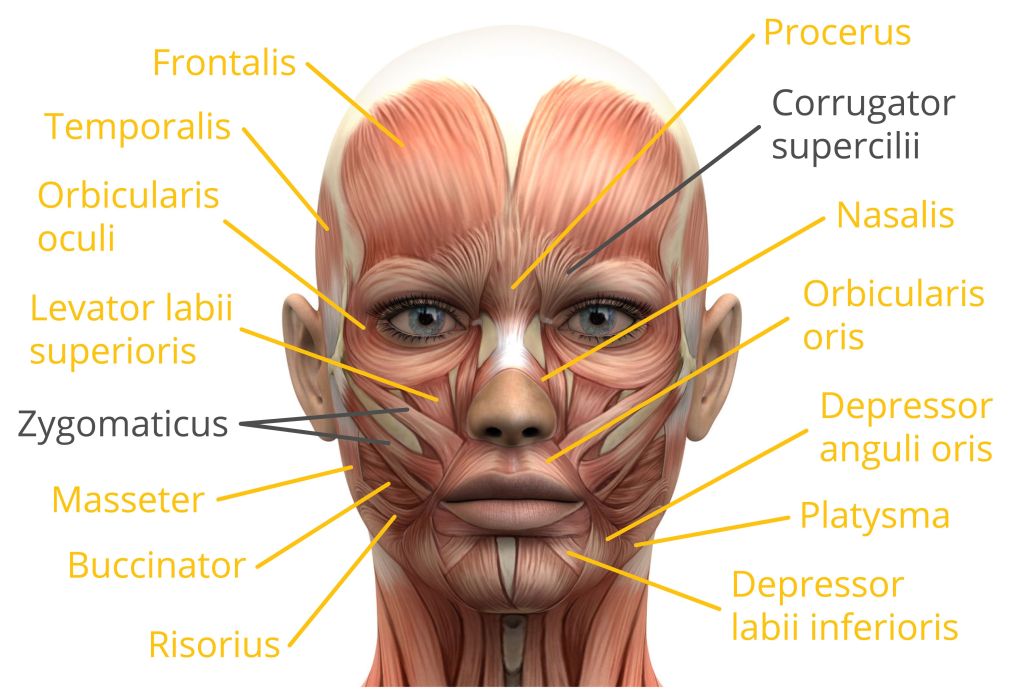
This is an image of the muscles of the face in particular. I will cover the muscles of the internal mouth in another blog, but these are the facial muscles. We engage these muscles all the time without considering how we do things.
Procerus and Corrugator supercilii – these are the furrowed brow muscles. When you pull your eyebrows together and down this muscle engages as if you’re angry or confused.
Frontalis – this is the raised eyebrow muscle. It connects through another muscle belly called occipitalis if you engage your Frontalis muscle it will express surprise or excitement, but Occipitalis pulling from behind engages to express a surprise of fear.
Teporalis – This is the muscle that raises your ears to express shock or shyness. You can engage this muscle by either using a pair of glasses or imagining them and trying to pull them onto your face with your ears. BTW it’s not vestigial.
Orbicularis Oculi – The muscle of speculation… maybe thats where the name is from or at least it’s apt. This muscle lets you squint your eye’s to narrow your vision, but also expressing inquiry about a potentially erroneous matter. I do this to anything our current VP says as most is incorrect.
Nasalis – Full House fans, whether from childhood or the Fuller house resurgence of the show will remember the “bunny nose”. This is the muscle they are engaging and you can engage it separately by acting like you smelled it, but don’t want to accusation of dealing it. (that’s a fart joke)
Levator Labii Superioris – This muscle engages to keep a “stiff upper lip”, but really looks more like your are disgusted when you merely engage the muscle. Sometimes it can be fun to engage this while smiling to reveal your incisors… like the count… one, a haha, two, a haha, three, ah ha haaaa…..
Zygomasticus – Now we come over to the eye smile muscle. This one usually also engages with some of the Orbicularis Oculi drawing an upward smile that counterpoints toward the eyesocket. This is considered to be a more authentic and inviting smile.
Orbicularis Oris – This is also known as the primary muscle of the emboucher. #BandGeekAlert! This sphincter (round shaped) muscle is what forms the minor movements and basis of your mouth shape. You can work on this muscle just by moving your lips or even doing the horsey mouth buzz like a brass player.
Masseter – These are your chewing muscles. I think it speaks for itself on how to innervate this muscle.
Buccinator – Welcome to the cheek muscles. When you see “gaunt cheeks” instead of thinking what most people think you may remark while wearing an eyepatch, “those buccaneers need to workout their buccinators.” The problem is that these muscles are designed to allow you to move food in your mouth for better chewing, but people fail to excercise it properly. You have two heads which need two types of exercises. 1. The joker smile… you smile straight towards C3&4 at the back of your neck. It’s a creepy smile, but it works the buccinators. 2. You need to inflate your cheeks with air and force that air bubble back and forth to give opposing force.
Risorius – Is a muscle that is used to pull the mouth wider on the edges, but the movement is smaller than that of the Buccinator or Zygomasticus. This is a muscle many know about because if it is split you get dimples 🙂 For your emboucher this muscle helps the reed instrument player and flautist, but plays nearly no role for the brass player.
Depressor Anguli Oris – Your frowning muscle. If you feel lilke your chin looks a little too thin you can chnge the appearance by exercising this muscle. This also is a muscle a brass player uses.
Platysma – As opposed to the sternocliedomastoid covered in my Workout Wednesday #4 happy heads that covered necks. This muscle is superficial and when engaged creates that look of dread with the stringing look on your neck. The primary action is to open the jaw wider than stronger muscle groups.
Depressor Labii Inferioris – The sax/clarinet players main use muscle for their emboucher is this muscle group. The advantage of this muscle is giving the appearance of a strong chin. If you think about moving the base of your bottom lip up from the chin you will innervate these muscles.
 MundyWrites
Leave a comment